Writing Like a Madwoman

The first friend I made in Columbia University's MFA program wrote exclusively about serial killers.
This seemed mildly concerning, but he was hilarious, so I decided not to worry about it.
The second friend I made was my neighbor, a soft-spoken gay man from somewhere in the Midwest. Idaho, maybe. My memory of graduate school is oddly selective. I can remember workshop critiques from twenty years ago, but not where half my classmates were from.
What I remember clearly is that I arrived at Columbia believing I was a writer and left understanding how difficult that title is to earn.
My first year in graduate school was humbling.
The first professor I had told me my work wasn't emotionally authentic. At the time, I was devastated. I assumed she was right. Professors were supposed to know these things.
A year later, I showed the exact same chapter of my novel to my thesis advisor. He loved it.

Apparently, literature is not a science. Two intelligent people can read the same pages and arrive at completely different conclusions.
I had my first manic episode during that first year of graduate school. I was hospitalized for seven days. The reason they admitted me was that I was laughing hysterically and moving furniture around the lobby of my apartment building.
After I was released from the hospital, I was still manic and unable to write anything that felt good. My thoughts were racing too fast to settle into coherent prose.
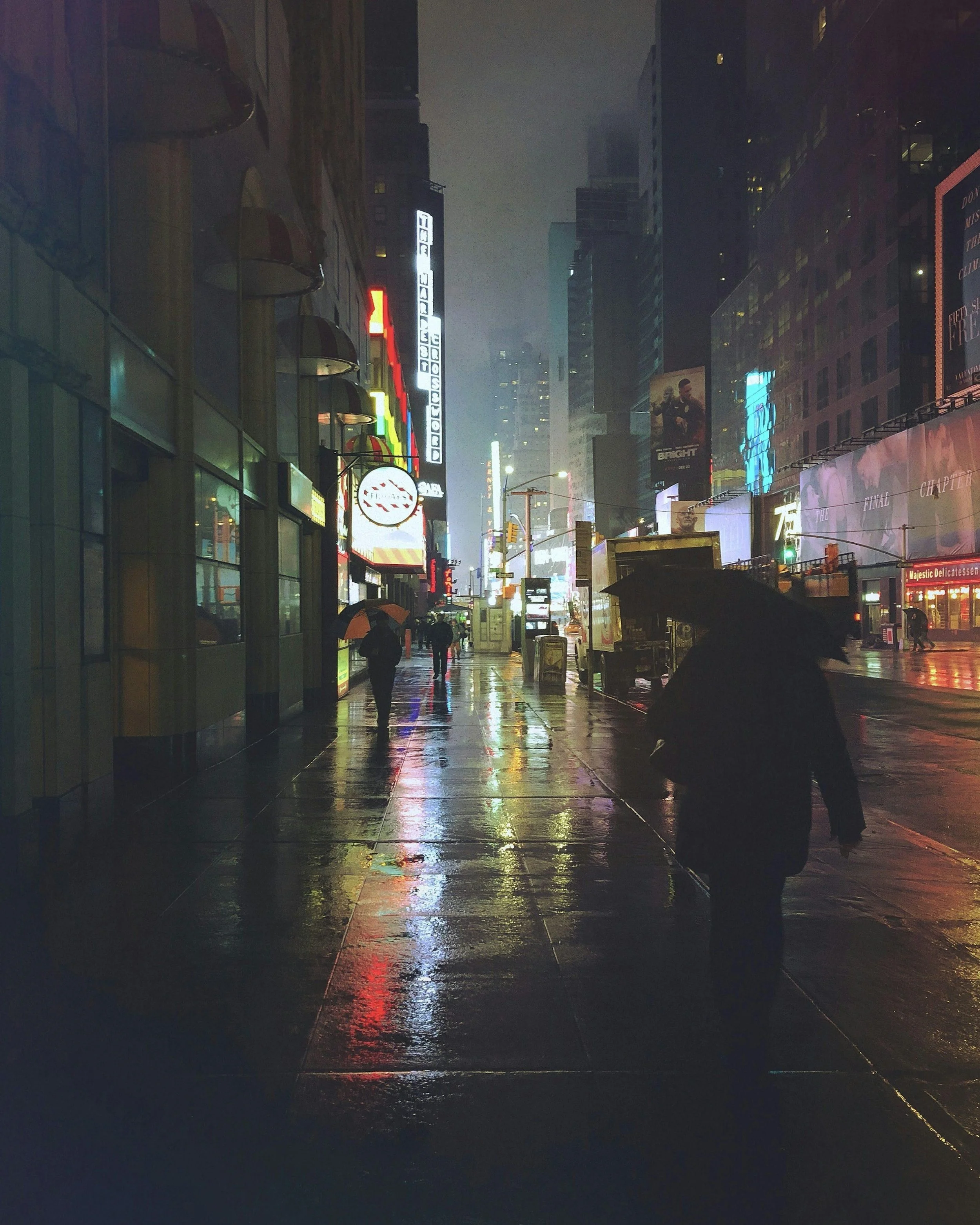
While I was in that manic state, I wandered around New York City for hours. I shopped, window-shopped, and walked aimlessly through neighborhoods. At the time, it felt like I was searching for something. Looking back, I'm not sure what.
Eventually, the mania subsided. Then came the depression.
I had trouble getting out of bed. Most days, I managed to make it to class, but my writing suffered. I was lonely, too. Depression has a way of convincing you that isolation is preferable to human contact, even when it isn't.
It was a difficult year.
I went home that summer and gradually emerged from the depression. When I returned to Columbia for my second year, something had changed.
I started becoming more confident in my prose style. I found professors who believed in me. More importantly, I started believing in myself.
I made friends. I wasn't manic. I wasn't depressed. For the first time since arriving in New York, I felt like I could fully participate in my own life.

My writing started out good and got even better as the year progressed.
I began writing about my experiences with mental illness and spirituality. At the time, I was fascinated by the relationship between insanity and enlightenment. I wondered whether my breakdown had also been some kind of breakthrough.
I wasn't interested in neat answers. I was interested in the questions.
What exactly separates madness from revelation? Why do so many artists struggle with mental illness? Is suffering necessary for great art? Can a person be psychologically unwell and spiritually awake at the same time?
The honesty with which I explored these questions seemed to resonate with my fellow students. Many of the writers in my program were wrestling with their own mental health challenges, and I found myself writing more and more about the complicated relationship between suffering, creativity, and meaning.
Then, during my final year, I met the mentor who would change everything.
He was a white, British, gay man with a wicked sense of humor. More importantly, he appreciated mine.
One day, he told me that I had found my voice.
He described it as witty.
That may not sound like much, but it was exactly what I needed to hear.
Up until then, I had spent years trying to write like other people. Suddenly, someone I respected was giving me permission to sound like myself.
The funny thing is that he didn't actually give me my voice. It was already there.
He simply recognized it before I did.
After that, I started writing like a madwoman.
Not because I was manic.
Because I was finally free.
nina
BECOME A FRIEND OF NINALAND
If my writing has ever made you laugh, think, or feel a little less alone, consider becoming a Friend of Ninaland. Friends receive exclusive content, including bonus essays, audio versions of posts, behind-the-scenes notes, and the occasional piece that never makes it onto the blog. Your support helps keep Ninaland going.
Join here: Friends of Ninaland
$1.99 Every month
✓ Exclusive Content
✓ Bonus Essays
✓ Audio Versions of Posts
✓ Behind-the-Scenes Notes
Log In: https://www.ninakaur.com/friends-of-ninaland#page
Do you need help learning how to read, write, or speak English?
I am an experienced tutor who can give you real conversational and written expertise in English Language Learning.
I can also help with Foreign Accent Reduction.
I work virtually in any time zone in any country.
To explore tutoring with me, please submit the form below:
A couple of friends and I started a podcast called 2 Curries and a Ranch. Listen here: https://2curriesandaranch.riverside.com/ or wherever you get your podcasts.
Imagine two loud, dramatic, hilarious Indian women explaining to a white man what it's like to grow up and live in America. Join us for laughter, deep thoughts, and witty banter about life, love and culture. We tell it like it is, with honest, bold and funny stories, discussions and arguments. We explore boundaries and challenge norms. Join us for a good talk.
We have a new episode out: AI
We dive into how AI is so nice, the world of AI girlfriends, and much more. Plus, Nina's now monetizing her blog! At least until AI takes it over and takes all the money.